

GET A FREE QUOTE

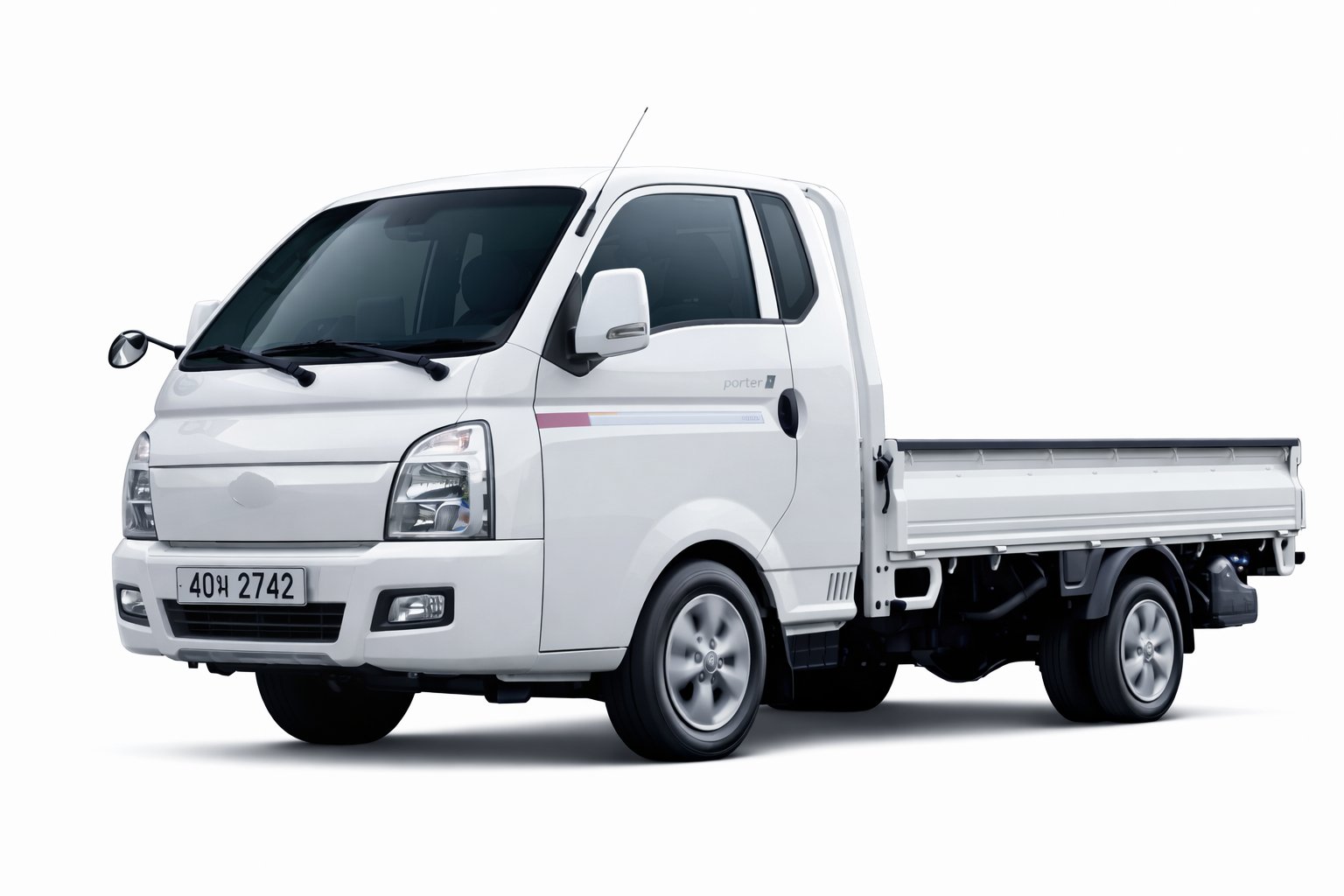
Porter II vehicle illustration from YASSIA’s media library. Model names alone do not establish part compatibility.
YASSIA Buying Guides
A useful Hyundai Porter H100 parts order combines accurate fitment information with the needs of the fleet. YASSIA’s Korean truck catalogue gives wholesalers and service buyers a starting point for cooling, steering, electrical and cab-related parts. The strongest inquiry explains which vehicles need each reference, how many units are required and when the buyer needs them.
Buyers often search for “Porter parts,” “H100 spare parts” or “Porter II parts” while describing different vehicles and markets. A familiar model name is helpful for finding a catalogue, but it should not be the only information on a purchase order.
Hyundai’s official H100 information describes a commercial truck with configuration choices and notes that vehicle details can vary by country. For procurement, record the sales market, build year, engine and cab or chassis specification alongside the part number.
YASSIA has separate Porter catalogue listings and Porter II listings. Use them to narrow the inquiry, then verify the application at product level. A category label or year range should not override the original parts record for the actual truck.
A fleet buyer has a different problem from a customer replacing one damaged component. The goal is to organize a useful selection without accumulating similar-looking parts that serve the wrong vehicles. Begin with your own service history and vehicle count, then group the inquiry by system.
YASSIA’s catalogue includes coolant pipes, radiator hose assemblies and oil cooler supply pipes. For these items, compare routing, connection diameter and bracket positions as well as the reference number. Photographs of the existing assembly can clarify an inquiry, particularly where the same fleet contains trucks from several build years.
A power steering pump or switch needs more than a visual resemblance. Identify mounting details, the relevant connections and the original reference. Ask for application confirmation before grouping quantities across vehicles. This is especially useful when workshop records use a short model description while the supplier catalogue uses an OE number.
Wiper arms, lamps and mud flaps can be practical additions to a fleet inquiry, but position and configuration still matter. Specify left or right where applicable, and make clear whether a listing describes one piece or an assembly. Do not infer the contents of a set from a product photograph alone.
| System / product | Catalogue reference | Buyer’s check |
|---|---|---|
| Cooling / coolant pipe | 97320-4F000 | Pipe routing, connections and brackets. |
| Cooling / radiator hose assembly | 97330-4F000 | Shape, connection sizes and exact application. |
| Cooling / oil cooler supply pipe | 26440-4B102 | Engine configuration and mounting details. |
| Steering / power steering pump | 57100-4B010 | Connections, mounting and vehicle specification. |
| Visibility / wiper arm listing | 98310-4F000 / 98320-4F000 | Required side, arm design and supplied quantity. |
These are catalogue references for discussion with YASSIA, not a statement of universal fitment or current stock availability.

One mixed order can contain three very different priorities. Mark urgent workshop requests separately from routine replenishment and new references being evaluated. This gives the supplier a clearer basis for quoting availability and gives the buyer a way to decide whether a partial shipment is useful.
For routine stock, use actual consumption and confirmed vehicle coverage rather than an assumed list of “fast-moving” parts. Review which references your workshops used, which remained on the shelf and which were returned because the application was wrong. Those records are more useful than a generic fleet shopping list.
For a new reference, agree on how you will review a sample or trial quantity before a larger purchase. Keep the accepted reference, photographs and inspection requirements on the same sheet so that reorders do not depend on a previous buyer’s memory.
Use one row per reference. Include the vehicle group, engine or chassis information, original part number, required side if relevant, quantity and priority. Add a clear photograph or drawing where the reference needs clarification.
Complete the commercial brief with the destination, preferred trade term, delivery window, carton labels and requested documentation. Ask YASSIA to state minimum order quantities, lead times and packing details against each line. A single overall delivery estimate can hide differences between items in a mixed order.
YASSIA’s manufacturing and international trade background supports a discussion of supply requirements, OEM/ODM projects and custom packaging. Those services should be agreed for the proposed products and quantities. They are not a promise that every catalogue item can be customized or delivered on the same schedule.
No blanket assumption is safe. Match the reference to the specific vehicle, market, build year and configuration before ordering. Similar model names or appearance are not enough.
Start with your fleet’s service records, confirmed applications and supplier lead times. Prioritize parts based on actual demand rather than treating every catalogue item as essential stock.
Use the catalogue to assemble a mixed list and send the quantities for each reference. Ask YASSIA to confirm application, availability and commercial terms separately for each line.
Specify the required side and original number, then compare the mounting and arm design. Also confirm whether the quote covers one arm or more than one component.
Vehicle reference: Hyundai Motor Company — H100. Product examples come from YASSIA’s linked catalogue. YASSIA offers aftermarket parts; model names and OE references are used for application identification.


